Learning Outcomes

Identify how to evaluate the design and implementation of internal controls within the audit risk assessment process.

Determine when testing operating effectiveness is required to support reliance on key internal controls.



Earn CPE Credits!
Earn CPE Credits!
This session explains how auditors evaluate the design, implementation, and operating effectiveness of internal controls during financial statement audits. It covers documentation practices, control testing approaches, IT control considerations, and how control reliance affects audit strategy and procedures.
Identify key controls that reduce the risk of material misstatement
Apply documentation approaches aligned with audit standards
Recognize the role of IT general and application controls in audits
Interpret SOC report implications for audit planning
Understand how control reliance impacts substantive procedures

Assess whether entity-level and transaction-level controls are properly designed and placed into operation before reliance decisions.
Review how control activities support risk assessment and help reduce the likelihood of material misstatement.
Understand how technology controls support reliable financial reporting and influence audit testing strategies.
Interpret SOC reports and determine their relevance when relying on third-party service providers.
Apply procedures that confirm controls function consistently throughout the audit period.
Understand how effective controls influence the timing, nature, and extent of substantive audit testing.
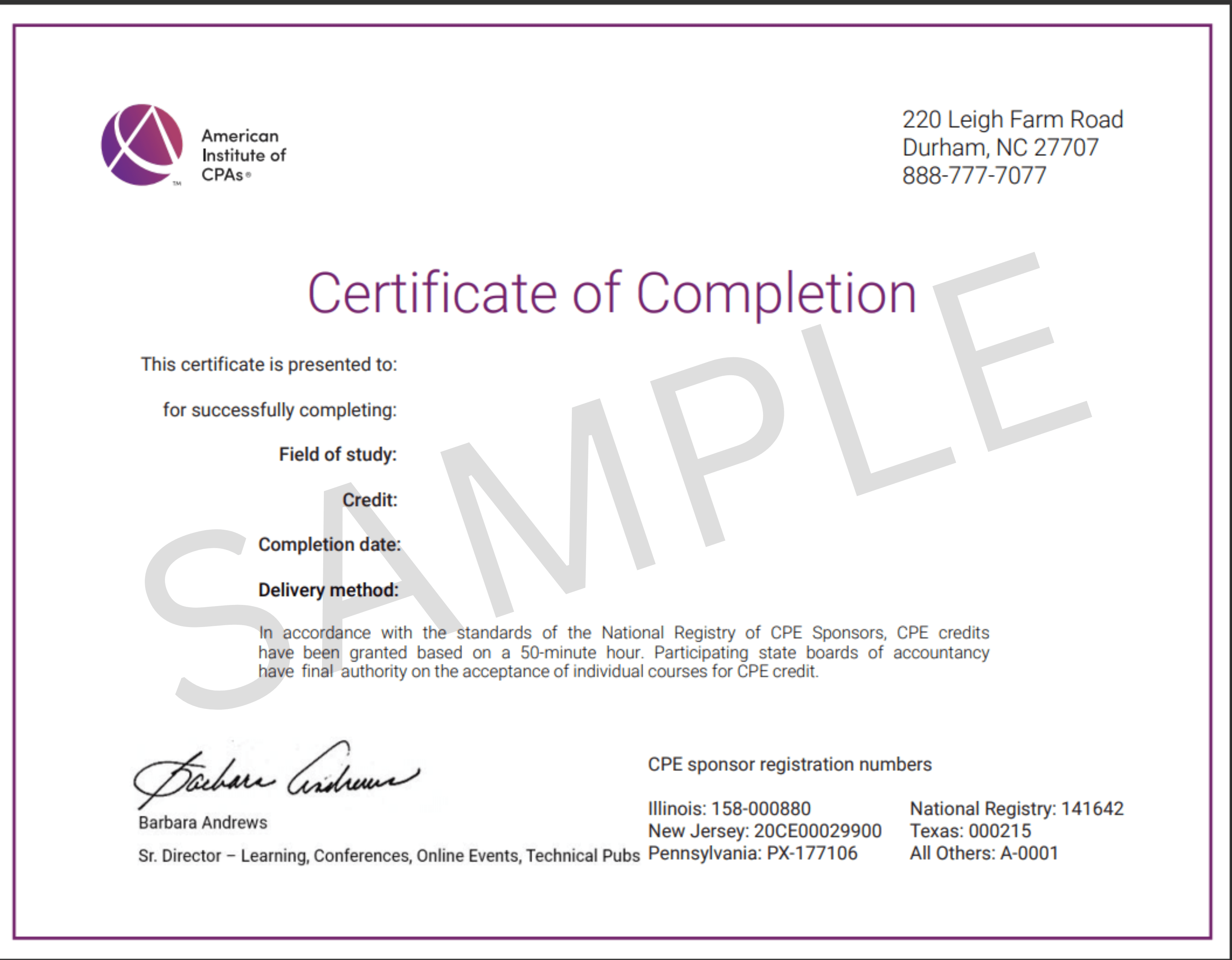
Get a preview of your achievement with Demo Certificate - a glimpse of the credential you’ll earn after successfully completing the program.
Jennifer Louis is an experienced audit professional and educator specializing in financial statement audits and audit methodology. She focuses on simplifying complex audit concepts and providing practical guidance on engagement planning, risk assessment, and compliance with professional standards.
What Skills Will I Gain?

Participants learn to evaluate internal control design, assess implementation effectiveness, identify key controls, interpret SOC reports, and determine when control reliance supports reduced audit risk.
How Is the Program Delivered?
The session is delivered online as a self-study format, allowing participants to complete the learning at their own pace.
Who Should Enroll?
This session is suitable for new auditors, audit staff performing control testing, and accounting professionals seeking stronger understanding of internal control evaluation in audits.
What Topics Are Covered?
Topics include control design evaluation, implementation assessment, IT and application controls, SOC report considerations, operating effectiveness testing, and control reliance strategies.
How Many CPE Credits Are Offered?
The program offers 2 CPE credits under the Accounting and Auditing field of study.
What Is the Program Level and Field of Study?
The session is Basic level and falls under the Accounting and Auditing NASBA field of study.