BOARD360 - Global Learning Academy hjh
___
Home / All Programs / AICPA Certification / Introduction to Cost Accounting

Introduction to Cost Accounting

Introduction to Cost Accounting

Earn CPE Credits!

  • Format: Online
  • CPE Credits: 1
  • Level: Basic
  • Field of Study: Finance and Management
6225

Introduction to Cost Accounting

Earn CPE Credits!

  • Format: Online
  • CPE Credits: 1
  • Level: Basic
  • Field of Study: Finance and Management
6225

Introduction to Cost Accounting

Cost Accounting Fundamentals

Learn how to classify, analyze, and interpret costs for business decision-making. Understand how costs behave across different activity levels and apply cost concepts to improve planning, control, and performance evaluation.

  • Cost classification for decision-making

  • Direct vs indirect cost identification

  • Cost behavior and cost drivers

  • Fixed and variable cost analysis

  • Practical application through exercises

Who Should Enroll?

Global accounting and finance professionals
Build clarity on cost structures, cost classifications, and activity-based cost behavior to support analysis, reporting, and operational decision-making.
Management accounting professionals
Strengthen understanding of cost drivers, direct and indirect costs, and how cost behavior supports planning, control, and performance evaluation.
CPAs
Enhance ability to interpret cost information, distinguish cost types, and apply cost concepts when advising on pricing, budgeting, and profitability.
Supply chain professionals
Understand how cost behavior impacts operations, logistics decisions, and resource allocation across different activity levels.

Key Areas Covered

Cost classification approaches

Differentiate between direct and indirect costs and apply classification methods to support accurate costing and reporting.

Cost behavior analysis

Examine how fixed and variable costs respond to changes in activity levels for planning and control purposes.

Cost drivers and allocation

Identify key cost drivers and apply allocation techniques to improve accuracy in product and service costing.

Decision-making using cost data

Use relevant cost information to support pricing, budgeting, and short-term operational decisions.

Understanding unit cost concepts

Interpret how cost components contribute to unit cost calculations across products and services.

Practical application of costing methods

Apply cost accounting techniques through structured examples reflecting common business scenarios.

Course Overview

Understand cost classification fundamentals
Learn how different cost types are identified and classified to support accurate analysis and better managerial decision-making.
Analyze cost behavior across activity levels
Examine how fixed and variable costs respond to operational changes and influence planning and budgeting decisions.
Apply direct and indirect cost concepts
Recognize how direct and indirect costs are assigned to products and services to improve cost measurement accuracy.
Use cost information for business decisions
Understand how cost data supports pricing, resource allocation, and evaluation of operational performance.
About Authors
This course is developed by a global network of finance and management professionals in collaboration with AICPA & CIMA, bringing practical insights and real-world experience into cost accounting concepts and applications.

Certification That Elevates Your Professional Journey!

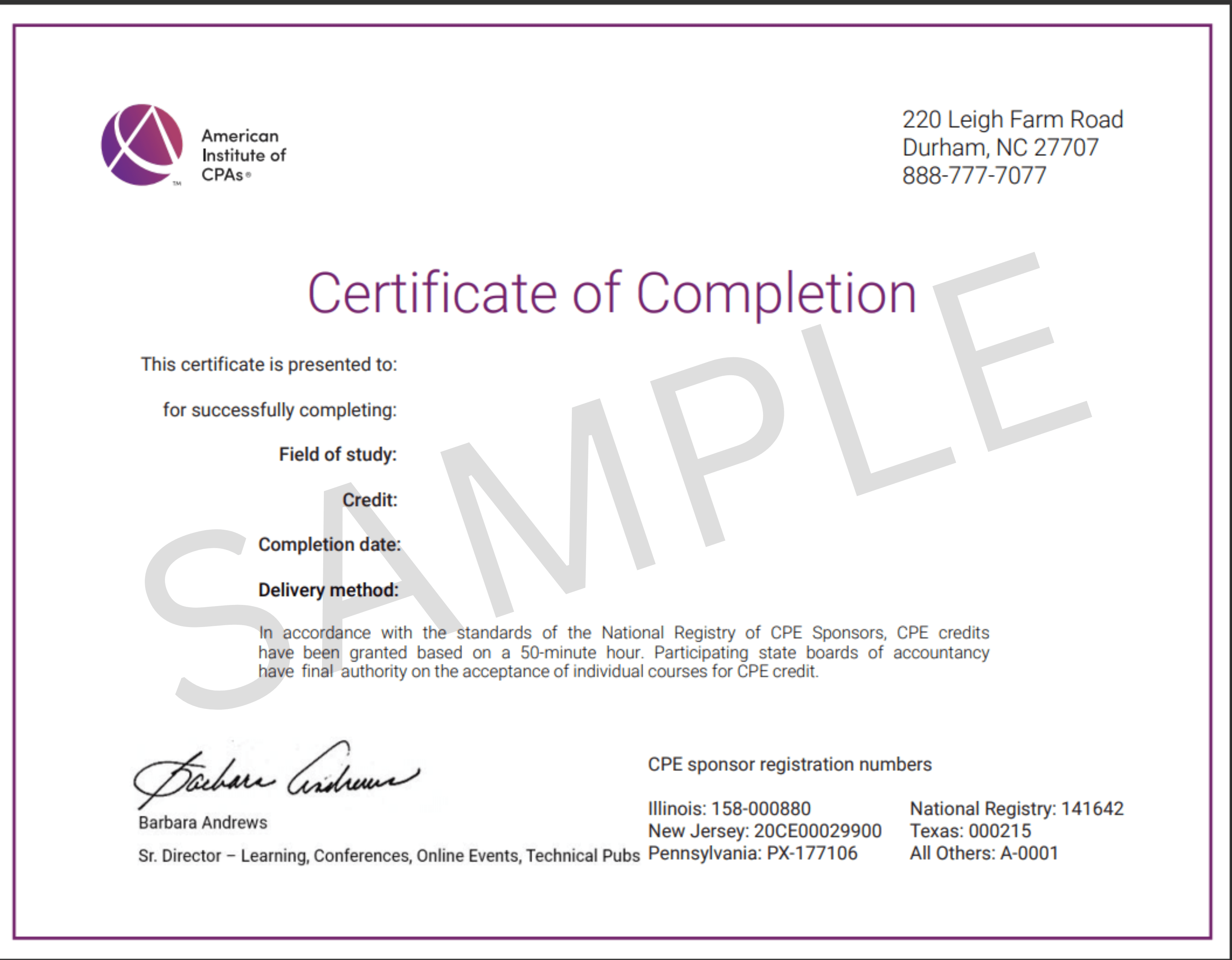
Get a preview of your achievement with Demo Certificate - a glimpse of the credential you’ll earn after successfully completing the program.

Certificate Image
Click to enlarge

About Authors

Industry Expert Contributors

Developed by experienced finance and management professionals with practical expertise in budgeting, forecasting, and operational planning across business environments.

Global Accounting Specialists

Content designed by subject matter experts associated with international accounting bodies, ensuring relevance, accuracy, and application in real-world financial contexts.

FAQs

What Skills Will I Gain?

dropdown arrow icon

Develop the ability to classify costs, distinguish direct and indirect costs, analyze cost behavior at different activity levels, and apply cost information to support operational and managerial decisions.

How Is the Program Delivered?

dropdown arrow icon

The course is delivered online in a self-study format, allowing participants to progress at their own pace while completing structured learning exercises.

Who Should Enroll?

dropdown arrow icon

This course is designed for accounting and finance professionals, management accountants, CPAs, and supply chain professionals involved in cost analysis and decision support.

What Topics Are Covered?

dropdown arrow icon

Key topics include cost classification methods, cost behavior and drivers, direct and indirect costs, variable and fixed costs, and unit cost interpretation.

How Many CPE Credits Are Offered?

dropdown arrow icon

This course offers 1 CPE credit in the Finance and Management field of study.

What Is the Program Level and Field of Study?

dropdown arrow icon

The program is offered at a Basic level and qualifies under the Finance and Management NASBA field of study.

Learning Outcomes

Identify how different cost classifications support accurate analysis of products and services.

Evaluate how fixed and variable costs behave across activity levels for planning and control.

Recognize how cost drivers influence decision-making and unit cost interpretation in business contexts.

Industry-relevant cost accounting concepts that strengthen analytical capability and support informed financial decisions.