Learning Outcomes

Identify how data mining supports extracting patterns and insights from structured business datasets.

Recognize how clustering and regression techniques contribute to descriptive and predictive analytics tasks.




Earn CPE Credits!
Earn CPE Credits!
Learn how to identify patterns in financial and operational data using data mining and modeling methods. The course explains how analytics supports forecasting, risk awareness, and decision-making through structured analysis of historical data.
Understand how data mining supports business analysis and forecasting
Recognize common data modeling techniques used in analytics projects
Identify analytics approaches that improve operational efficiency
Apply clustering concepts for descriptive data analysis
Use regression concepts to support predictive decision-making

Understand how data mining supports identifying patterns and insights for performance evaluation and forecasting.
Learn how models organize data relationships to support analysis, interpretation, and decision-making processes.
Explore how clustering methods group similar data points to support descriptive analytics and segmentation tasks.
Recognize how regression techniques help estimate relationships and support predictive analytics applications.
Identify commonly used tools and methods applied in data mining and modeling environments.
Understand key limitations, assumptions, and risks associated with developing and applying analytical models.
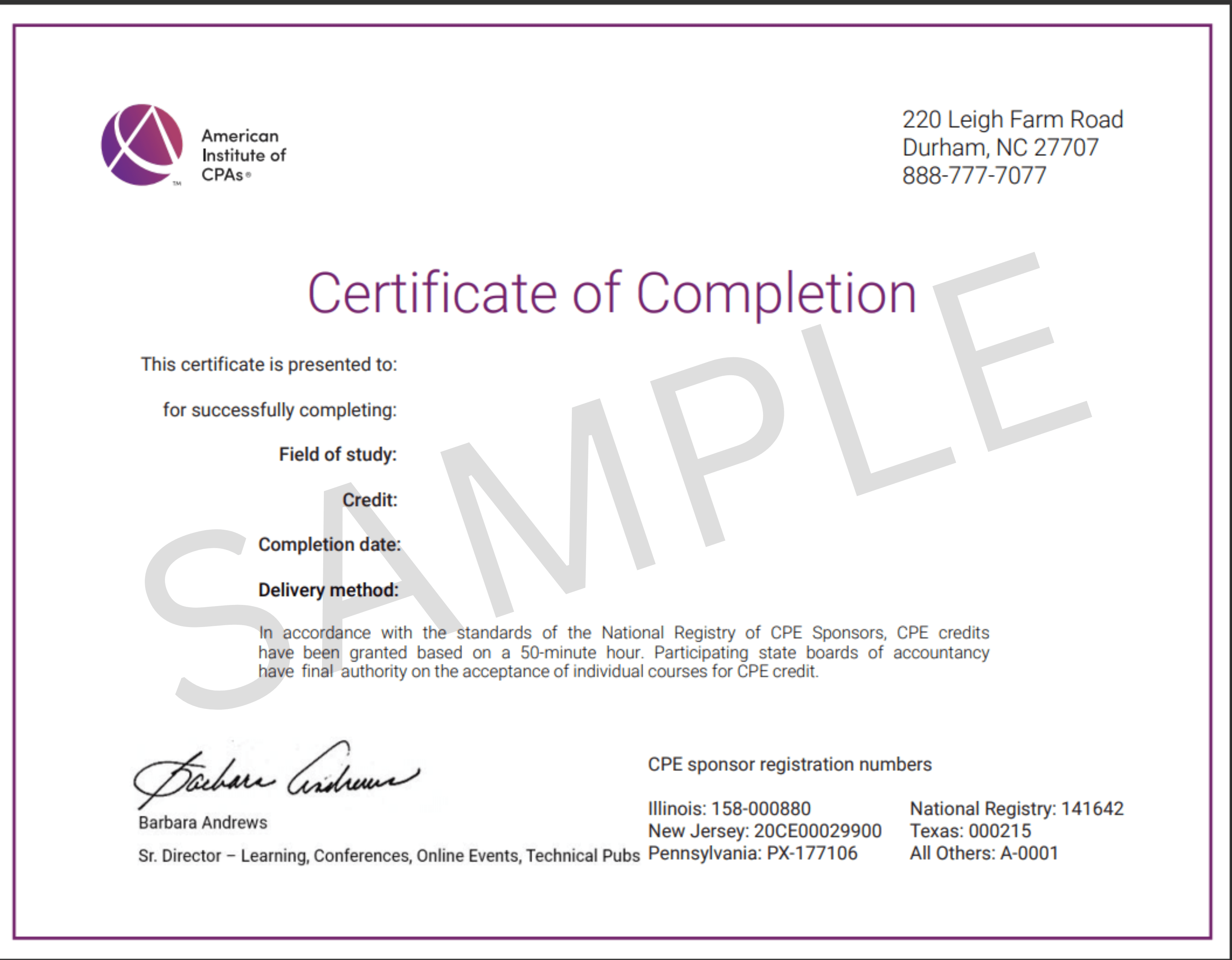
Get a preview of your achievement with Demo Certificate - a glimpse of the credential you’ll earn after successfully completing the program.
Prepared by AICPA subject-matter specialists with expertise in accounting standards, financial reporting, and emerging digital asset practices affecting compliance and professional responsibilities.
Developed by CIMA technical experts focused on management accounting frameworks, regulatory developments, and practical guidance supporting digital asset understanding in modern finance environments.
What Skills Will I Gain?

Learn how to identify patterns in datasets, understand clustering and regression techniques, and interpret analytical results to support forecasting and decision-making.
How Is the Program Delivered?
The course is delivered online in a self-paced format, allowing flexible learning with structured modules and practical examples.
Who Should Enroll?
Designed for finance professionals, controllers, CPAs, CIMA members, and learners beginning to explore data analytics concepts in business contexts.
What Topics Are Covered?
How Many CPE Credits Are Offered?
This program provides 3.5 CPE credits under the Professional Development and Skills field of study.
What Is the Program Level and Field of Study?
The program is at a basic level and falls under the Management & Skill Development field of study.