Learning Outcomes

Identify how digital assets are structured and used within financial environments
Evaluate custody methods, wallet types, and private key responsibilities



Earn CPE Credits!
Earn CPE Credits!
Digital assets introduce new regulatory, custody, valuation, and risk considerations for accounting and finance professionals. This course explains the structure, classification, and compliance implications of digital assets, helping learners understand how they are used, secured, reported, and governed within evolving regulatory frameworks and professional practice environments.
Understand the regulatory landscape affecting digital asset usage and reporting
Identify core characteristics distinguishing digital assets from traditional assets
Recognize custody models, wallet types, and private key responsibilities
Evaluate risks including volatility, security exposure, and compliance concerns
Apply governance and control considerations to digital asset environments


Understand transferability, divisibility, liquidity behavior, programmability features, and how digital assets differ from traditional financial instruments.
Recognize store-of-value assets, transfer-focused tokens, and ownership-based digital assets such as tokenized instruments and NFTs.
Learn how hot and cold storage operate and understand custodial and noncustodial responsibility models.
Identify how private keys support ownership control and the risks associated with loss, compromise, or improper handling.
Evaluate threats affecting digital asset storage and review safeguards supporting secure holding environments.
Recognize governance expectations and compliance challenges affecting reporting, monitoring, and professional oversight of digital assets.
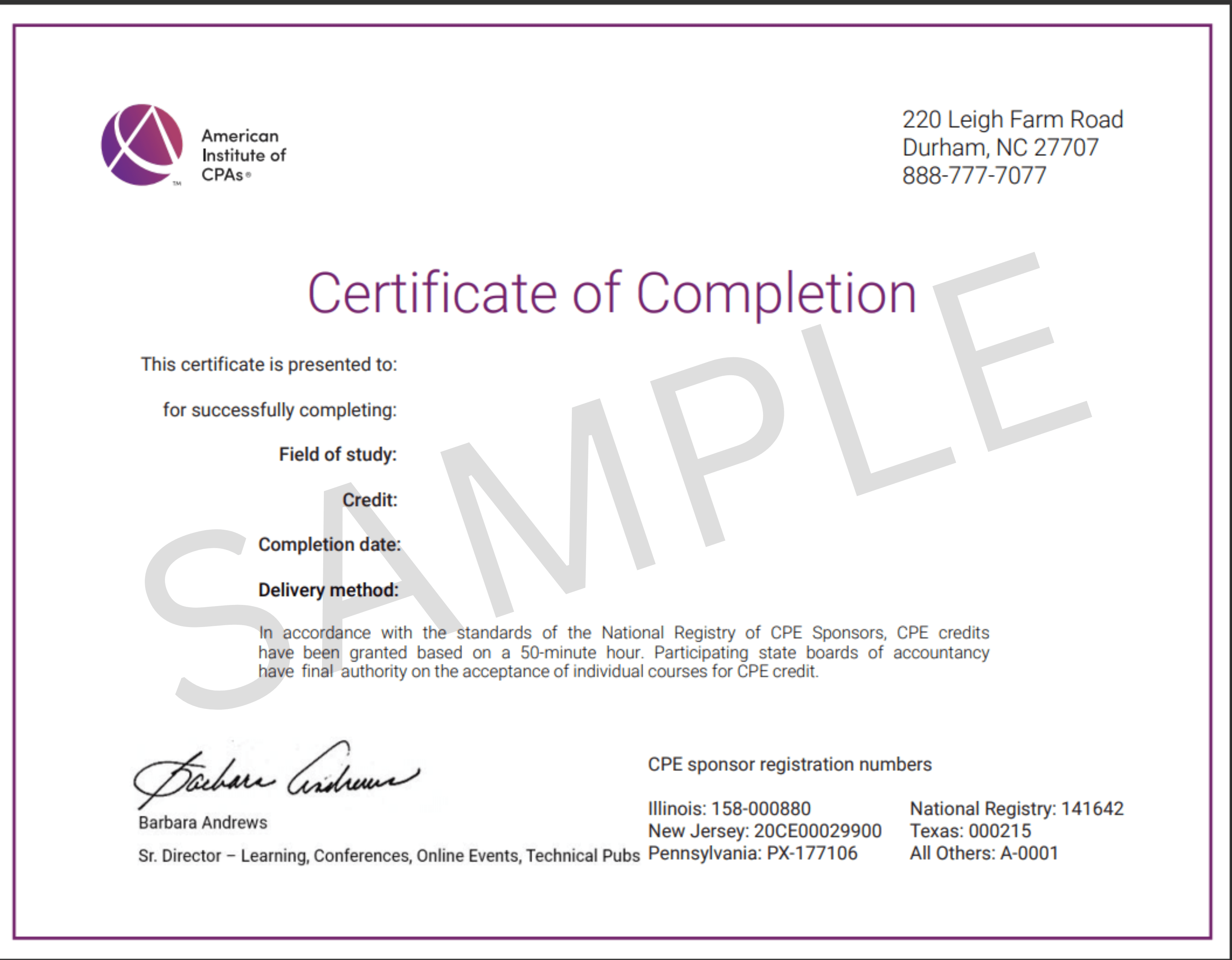
Get a preview of your achievement with Demo Certificate - a glimpse of the credential you’ll earn after successfully completing the program.
Prepared by AICPA subject-matter specialists with expertise in accounting standards, financial reporting, and emerging digital asset practices affecting compliance and professional responsibilities.
Developed by CIMA technical experts focused on management accounting frameworks, regulatory developments, and practical guidance supporting digital asset understanding in modern finance environments.
What Skills Will I Gain?

Participants learn how digital assets function, how ownership is controlled through wallets and keys, and how regulatory, custody, and storage risks influence professional oversight decisions.
How Is the Program Delivered?
The program is delivered online through structured self-study modules designed to support flexible learning while covering digital asset fundamentals and compliance considerations.
Who Should Enroll?
This course supports accountants, auditors, tax professionals, financial planners, and finance teams seeking structured knowledge of digital asset characteristics and governance considerations.
What Topics Are Covered?
Topics include digital asset classifications, wallet types, custody structures, storage risks, token use cases, and regulatory considerations affecting reporting and oversight.
How Many CPE Credits Are Offered?
The program offers 2 CPE credits through an online self-study format aligned with professional continuing education requirements.
What Is the Program Level and Field of Study?
The course is offered at the Basic level and is categorized under Regulatory and Compliance within the NASBA Field of Study classification.