Learning Outcomes
Identify ethical rule setters and apply ethical analysis methods

Understand and apply the AICPA Code, integrity, objectivity, and independence principles

Evaluate AICPA, SEC, and PCAOB independence and regulatory requirements



Earn CPE Credits!
Earn CPE Credits!
This course provides accounting and finance professionals with a comprehensive understanding of professional ethics, integrity, objectivity, and independence requirements applicable to CPA practice. Participants learn how to apply the AICPA Code of Professional Conduct, evaluate ethical situations, understand independence requirements, and recognize regulatory obligations affecting accounting, auditing, and tax professionals.
Understand the AICPA Code and conceptual framework.
Apply integrity, objectivity, and ethical principles.
Evaluate independence requirements and potential conflicts.
Recognize SEC, PCAOB, and regulatory requirements.
Identify ethics rules for tax, confidentiality, gifts, and conflicts.
Apply ethics through real-world scenarios and case studies.

Understand the fundamental principles, ethical rules, and conceptual framework used to analyze professional conduct and ethical matters.
Explore the requirements for maintaining integrity and objectivity and recognize situations that may create ethical threats or conflicts.
Understand AICPA independence rules relating to personal financial interests, loans, employment, business relationships, and immediate family members.
Review independence requirements established by regulators, including the SEC and PCAOB, and their relevance to accounting and auditing professionals.
Identify professional ethics requirements applicable to government auditors, employee benefit plan audits, federally funded organizations, financial institutions, and insurance-related engagements.
Understand ethical requirements relating to professional tax services, AICPA Statements on Standards for Tax Services (SSTSs), U.S. Treasury Circular No. 230, and IRS penalty provisions.
Recognize ethical considerations surrounding gifts, entertainment, conflicts of interest, confidentiality, and activities that may discredit the accounting profession.
Understand professional responsibilities relating to Non-Compliance with Laws and Regulations (NOCLAR) and related ethical considerations.
Apply professional ethics and independence principles to practical scenarios and case-based situations.
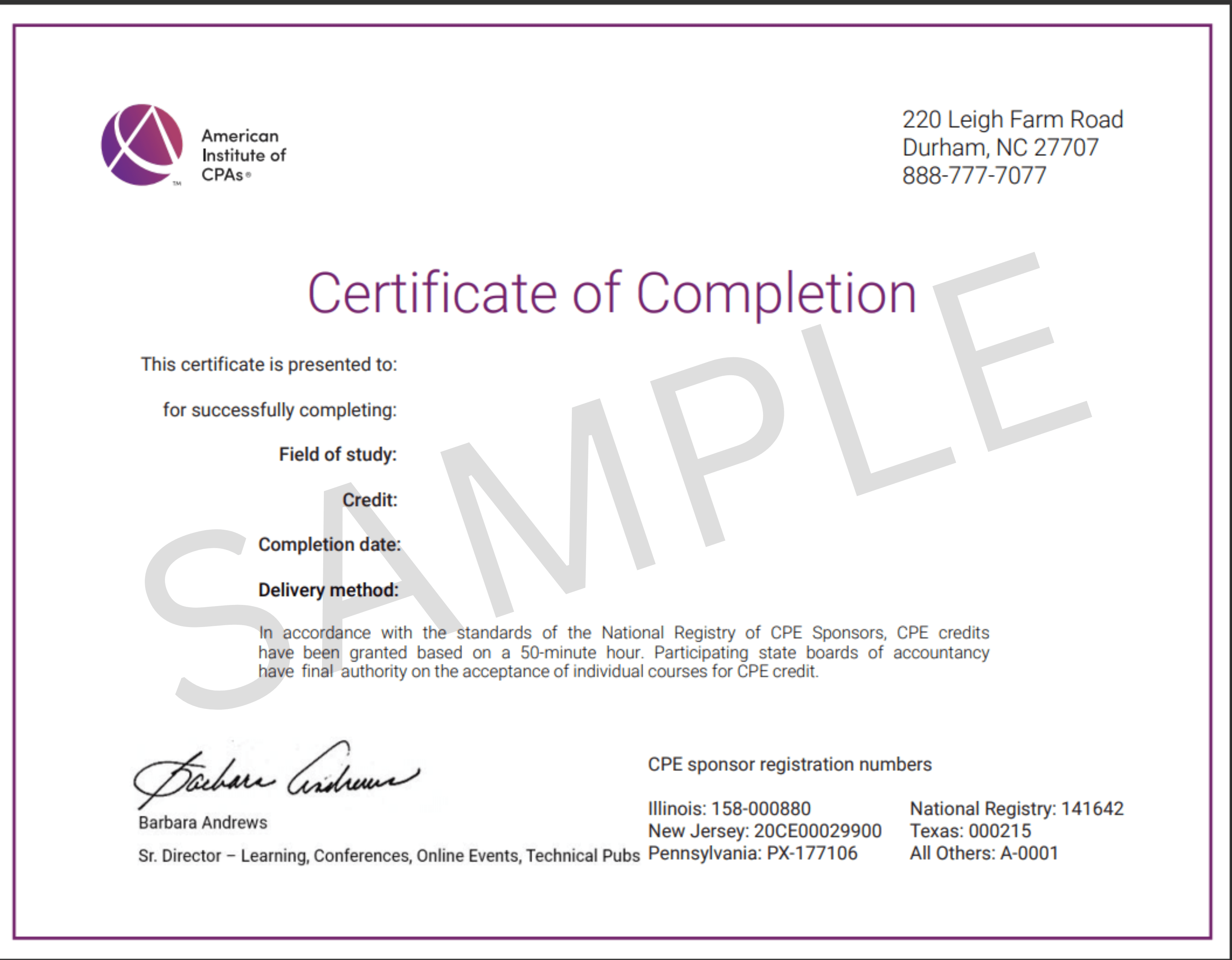
Get a preview of your achievement with Demo Certificate - a glimpse of the credential you’ll earn after successfully completing the program.
Prepared by AICPA subject-matter specialists with expertise in professional ethics, accounting, auditing, independence standards, taxation, and regulatory requirements applicable to CPA professionals.
What Skills Will I Gain?

Develop practical knowledge of professional ethics, integrity, objectivity, confidentiality, independence, and regulatory requirements, with the ability to apply the AICPA Code of Professional Conduct.
How Is the Program Delivered?
The program is delivered online, allowing participants to complete the course conveniently during the available access period.
Who Should Enroll?
The course is ideal for CPA candidates, CPAs, accounting and finance professionals, audit professionals, and tax professionals.
What Topics Are Covered?
Topics include the AICPA Code, independence, SEC and PCAOB requirements, conflicts of interest, confidentiality, tax ethics, NOCLAR, SSTSs, Circular No. 230, and IRS provisions.
How Many CPE Credits Are Offered?
The course provides 8.5 CPE credits under the Regulatory Ethics field of study.
Is This Course Accepted for CPA Licensure?
Ethics requirements vary by state, and many state boards may not accept this course for licensure. Candidates should confirm the requirements with their respective state board before enrolling.