Learning Outcomes

Identify basis allocation methods across partnership distributions

Evaluate Section 754 election impact on partnership asset basis adjustments



Earn CPE Credits
Earn CPE Credits
This course explains complex partnership taxation concepts related to basis adjustments, distributions, and the sale of partnership interests. It focuses on practical Subchapter K applications, Section 754 elections, and gain characterization rules to support accurate tax planning and reporting for partnerships and LLCs.
Understand partnership basis adjustments and distribution treatment
Apply Section 754 election rules in partnership taxation scenarios
Evaluate tax consequences from partnership interest transfers
Identify ordinary income components under Section 751(a)
Assess reporting impact of installment sales of partnership interests

Review tax treatment of liquidating and nonliquidating distributions and determine basis allocation across multiple distributed assets.
Understand how inside and outside basis adjustments apply under different transaction structures affecting partnerships and members.
Analyze gain recognition rules and determine character treatment when partnership ownership interests are transferred.
Evaluate when partnerships should apply Section 754 elections to adjust asset basis following ownership changes.
Identify situations where partnership interest sales create ordinary income due to unrealized receivables and inventory items.
Assess how installment method rules affect timing and recognition of gains from partnership interest dispositions.
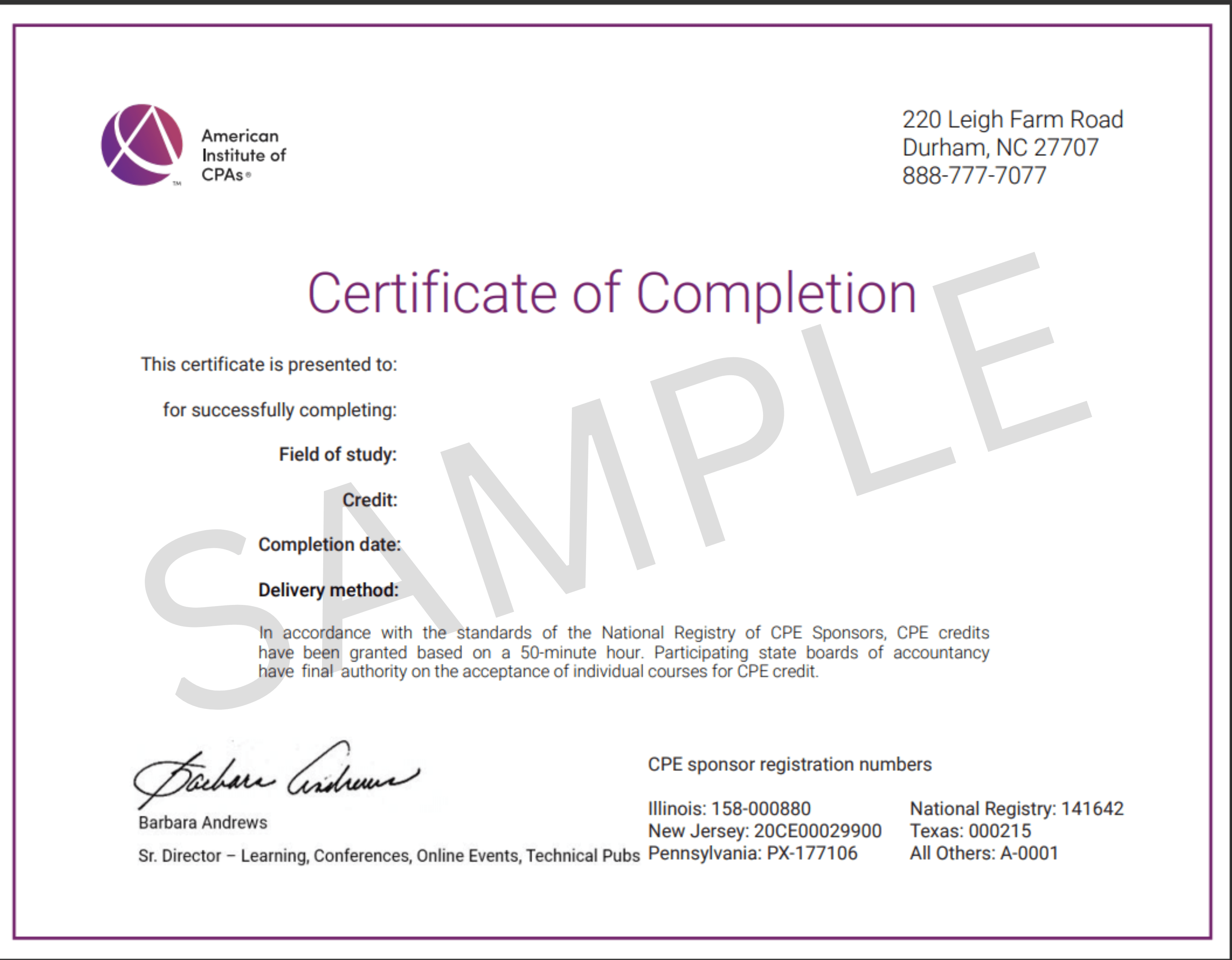
Get a preview of your achievement with Demo Certificate - a glimpse of the credential you’ll earn after successfully completing the program.
Larry Tunnell is a tax education specialist with extensive experience in partnership taxation and Subchapter K applications. He develops technical training focused on partnership basis rules, distributions, and ownership transfers, helping professionals apply complex tax provisions accurately in practice.
Robert Ricketts is an accounting and taxation educator with strong expertise in partnership and LLC transaction analysis. His work focuses on interpreting advanced distribution rules, Section 754 elections, and partnership interest sale treatment to support effective compliance and reporting decisions.
How Is the Program Delivered?

The course is delivered online through a structured self-study format designed for flexible learning and practical application of advanced partnership taxation concepts.
Who Should Enroll?
Tax professionals, accountants, and advisory teams involved in partnership or LLC transactions seeking deeper understanding of Subchapter K provisions and reporting implications.
What Topics Are Covered?
Key topics include liquidating and nonliquidating distributions, property basis calculations, Section 754 elections, partnership interest transfers, and ordinary income treatment under Section 751.
How Many CPE Credits Are Offered?
This course provides 3.5 CPE credits in the Taxes field of study.
What Is the Program Level and Field of Study?
The program is offered at an advanced level with Taxes as the NASBA field of study.